
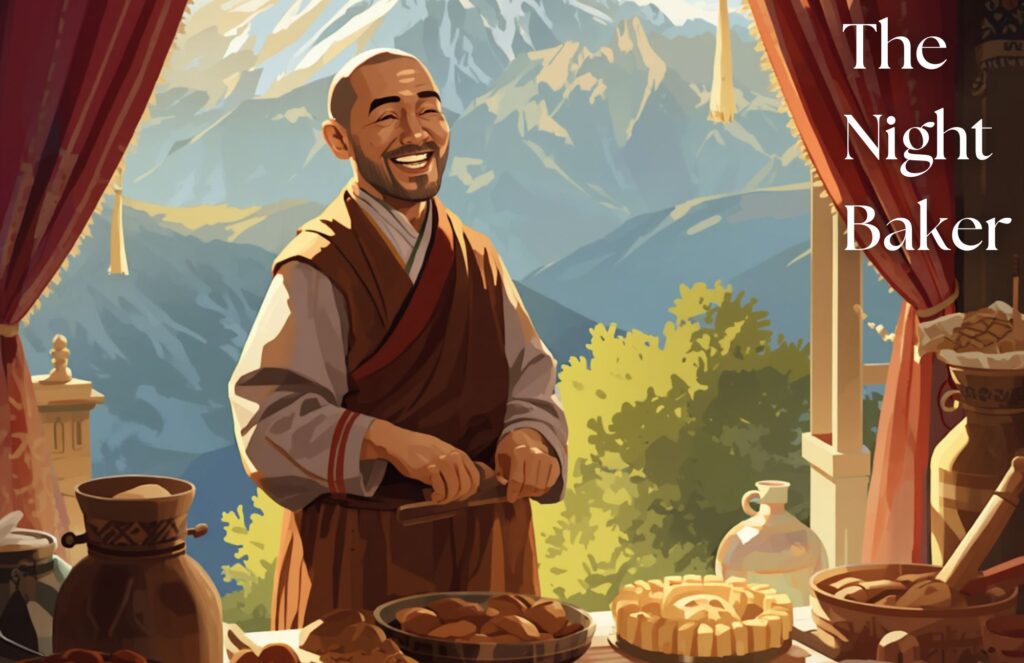
Copyright@Zeal Okogeri
There was once a small village nestled in a valley beneath a monastery perched on a hill. The villagers were hardworking people who knew one another by name. They celebrated together during harvests, helped one another repair roofs after storms, and shared in each other’s joys and sorrows.
Above the village stood the monastery, famous for its bakery. On cool mornings, the smell of freshly baked bread drifted down the hillside. Travelers often said they could find the monastery simply by following the scent.
For many years, life was good.
Then came a drought.
The rains stopped. The streams dwindled. Fields that had once been green and fertile turned brown and brittle beneath the relentless sun. Harvests failed. Food became scarce.
As the months passed, shop shelves grew emptier. Families stretched every meal as far as they could. Soup was watered down so much that it hardly deserved the name.
Many parents quietly skipped meals so their children would have enough to eat. Around dinner tables throughout the village, mothers and fathers smiled and pushed their bowls away.
“I’ve already eaten.”
“I’m not very hungry tonight.”
The children often believed them.
The parents hoped they would.
Brother Thomas, a monk at the monastery, saw the suffering below. He noticed the worried faces, the empty market stalls, and the children lingering outside shops with hopeful eyes.
One evening, troubled by what he had seen, he approached the abbot.
“Shouldn’t we help the villagers?” he asked.
The abbot looked toward the valley and sighed.
“My heart aches for them, Thomas. But our stores are limited. If we give away too much, the monastery may not survive the drought either.”
Thomas understood. The abbot was not being unkind. He was responsible for the lives of every monk in the monastery.
Still, Thomas could not forget the hungry children.
The next morning, while baking bread for the monastery, he quietly made one extra loaf.
Just one.
It was not enough to threaten the monastery’s supplies, but enough to help someone.
That night, after the monastery had fallen asleep, Thomas wrapped the warm loaf in cloth and carried it down the hill beneath the cover of darkness. He left it at the door of an elderly widow who lived alone and often struggled to provide for herself.
Then he slipped away unseen.
The next morning, the widow opened her door and stopped in surprise.
There, resting on her doorstep, was a fresh loaf of bread.
For a long moment she simply stared at it.
Then tears filled her eyes.
She looked up and down the empty road, but no one was there.
Whoever had left the loaf was gone.
That day, she ate some of the bread and shared the rest with a neighbor who had little food left.
The following night, Thomas carried another loaf to a family with many children. He had often seen the parents pretending not to be hungry so their sons and daughters could eat.
The bread arrived just when they needed it most.
But once again, something unexpected happened.
The family shared part of the loaf with an elderly man who lived by himself on the edge of the village.
A few days later, another family passed some of their bread to a woman whose disability made daily life difficult.
Night after night, Thomas baked one extra loaf and delivered it quietly to those he believed needed it most.
And night after night, the villagers shared what they received.
One cold evening, Thomas happened to notice a woman carrying a small bundle wrapped in cloth to a neighbor’s home.
Curious, he watched from a distance.
She knocked softly, left the bundle by the door, and hurried away.
A few moments later, the door opened.
Inside was an elderly man.
The bundle contained part of the very bread Thomas had delivered earlier that day.
As Thomas watched, something stirred in his heart.
He had hoped the bread would ease hunger.
He had never imagined it would inspire generosity.
Again and again he witnessed similar acts. Families who had little shared with those who had even less. People who were struggling still found room in their hearts to care for others.
The bread traveled farther than Thomas ever could.
Soon the villagers began talking about the mysterious loaves appearing on doorsteps.
No one knew who was leaving them.
Yet they continued to arrive.
People gave the unknown benefactor a name:
The Night Baker.
Stories about the Night Baker spread throughout the valley. Some believed he was a wealthy merchant. Others thought he was a traveler passing through. A few wondered whether an angel walked the village streets after dark.
Thomas heard the stories and smiled quietly.
He never told anyone the truth.
As the drought dragged on, the spirit of generosity grew stronger. Neighbors checked on one another. Families shared what little they had. The villagers refused to let anyone face hardship alone.
Then, at last, the rains returned.
The streams filled again.
The fields slowly turned green.
Seeds sprouted.
Harvests returned.
The famine was over.
The village survived.
Yet something remarkable happened.
The sharing did not stop.
Long after food became plentiful again, villagers continued to leave gifts for neighbors in need. Extra vegetables from gardens appeared on doorsteps. Fresh bread was shared. Meals were delivered to the elderly, the sick, and those living alone.
The kindness that had carried them through the drought became part of who they were.
Years passed.
Brother Thomas grew older and eventually retired from his duties at the monastery. He spent his days tending the gardens, praying, and enjoying the peaceful rhythms of monastery life.
He never revealed that he had been the Night Baker.
Only many years later, after Brother Thomas had retired, a young monk was helping organize old monastery records when he discovered Thomas’s diary.
Inside were simple entries written during the years of the drought.
“Tonight I left a loaf for the widow by the well.”
“The children in the Anata family looked hungry. I pray this bread helps.”
“Another loaf tomorrow.”
The entries continued for page after page.
The young monk read them in amazement.
The mystery that had endured for years was finally solved.
Brother Thomas had been the Night Baker.
When the villagers learned the truth, many were deeply moved.
Not because a mystery had been answered.
But because they finally understood that one humble man had quietly cared for them through their darkest days without ever seeking thanks, praise, or recognition.
When asked why he had never told anyone, Thomas simply smiled.
“The bread was never about me,” he said.
“It belonged to everyone who shared it.”
And perhaps he was right.
For the true miracle was never the extra loaf that left the monastery each night.
The true miracle was what happened after it arrived.
A widow sharing with a neighbor.
A family sharing with an old man living alone.
Villagers caring for one another when they themselves were hungry.
One loaf became many gifts.
One act of kindness became a tradition.
And that tradition nourished the village for generations.
So whenever fresh bread was shared in the valley, people remembered the lesson of the Night Baker:
Kindness grows when it is passed from hand to hand.
About the Author
Dr. Zeal Okogeri is a spiritual teacher, storyteller, and author who continues the timeless tradition of using stories to awaken the heart and reveal life’s deepest truths. Like the great wisdom teachers throughout history, he conveys spiritual principles not through lectures or rigid instruction, but through timeless stories that invite reflection, contemplation, and personal discovery.
Rather than telling readers what to believe, Dr. Zeal trusts each person to discern truth through the wisdom found within every story. His writings gently encourage the cultivation of kindness, love, peace, compassion, and the inner wisdom that transforms lives.
Dr. Zeal is the author of You Can Never Go Wrong By Being Kind. Through his books, guided meditations, retreats, and spiritual teachings, he inspires people to look within, awaken to their true nature, and live with greater love, peace, and purpose.
To explore more of his work and guided meditations, visit DrZeal.org
“The deepest truths are rarely taught. They are discovered.”